Meet Shawna
Welcome! I’m Shawna Seth, a California state licensed and nationally certified acupuncturist currently pursuing physician associate (PA) training. I live at the intersection of Western and Eastern medicine and love finding the places where they can each serve patients best.
I ran a private acupuncture practice in San Francisco that focused on my patients’ menstrual health, fertility, and overall emotional and physical health beyond their diagnoses. My mission was to improve my patients’ health, one cycle at a time. I also provided on-site acupuncture care at fertility clinics in San Francisco through a group called Integrative Fertility. Acupuncture has been shown to be beneficial in improving pregnancy rates when provided surrounding and about five days after IVF or IUI procedures.
I am not currently seeing patients as I’m in school full time. I plan to continue sharing my knowledge and perspective on my A Cuppa Qi blog and have also done some presenting and teaching on the topics of self care, anti-racism, and principles of traditional medicine in 2021. I welcome questions and love having interesting conversations by email.
Education & Credentials
California Licensed Acupuncturist, Herbalist, and Primary Care Provider (L.Ac.)
Certified Sept 2025
Nationally Certified Diplomate of Acupuncture & Herbal Medicine (AHM)
Masters of Science (MSOM) from Acupuncture and Integrative Medicine College, Berkeley (AIMC) - Magna Cum Laude
Japanese Traditional Acupuncture & Moxibustion Certification from Shikoku Medical College, Utazu, Japan
Japanese Style Facial Acupuncture Certification from Shikoku Medical College, Utazu, Japan
Acupuncture Internship, UCSF Benioff Children’s Hospital, San Francisco
Bachelor of Arts in Sociology from Vassar College, Poughkeepsie, NY - Cum Laude
Continuing Education includes
Western medicine crossover courses in Herb-Drug Interaction, Surgical Recovery and Scar Treatment, and how channels and fascia overlap and can be used accordingly.
Evidence-based Japanese Acupuncture courses in Trigger Point Acupuncture with Kazunori Itoh, Ph.D. and Contact Needling Therapy for Cancer Patients with Keiko Ogawa
Traditional Japanese Medicine (TJM) courses with Japanese master Masakazu Ikeda Sensei
Philosophy and Background
I don't work on you, but with you. As a patient, you have valuable information about what you are experiencing. I see you as a partner and collaborator in the exploration and improvement of your body and mind. I am a guide, bringing my training, tools, and compassion to your care and so providing information, context, and a relief or opening that can unlock what your body has been trying to do for you. The Japanese style of acupuncture that I practice has an emphasis that I appreciate and take as a guiding principle: being gentle and keeping the approach simple and effective.
Pelvic pain initially brought me to acupuncture, first as a patient many years ago, then as a practitioner. Women’s health concerns and the stress surrounding them have always renewed my own commitment to getting acupuncture for myself and providing it for others. And as a dancer for many years, I know how being forced to step away from activity you love, whether temporarily or permanently, can be painful, emotionally and physically.
I received my masters after training at the Acupuncture & Integrative Medicine College in Berkeley, California and studying abroad in both Japan and China. Now I spend my free time swinging a lightsaber and you might spot me at a local karaoke night.
You can find my thoughts on acupuncture and medicine on Instagram @acuppaqi and on my A Cuppa Qi blog.
My last major update was during the early months of the pandemic in 2020. Much has changed since then. When I closed my practice in February 2020, I thought I was going to continue as an acupuncture practitioner. The pandemic forced a change in those plans, as it made so many of us confront new realities and reassess our priorities.
Here I explain a bit about how I got to where I am now, studying to become a Physician Assistant (or PA, also known as a Physician Associate), and where I hope to be headed next.
Whether you’re a patient or another medical provider, you’ve heard the benefits of acupuncture, maybe even experienced them yourself, and want to learn more. You don’t have to spend four years in a masters program the way an acupuncturist does and you don’t have to dig deep into the theory, though that may interest you as well. This collection is in response to one of the most common questions I’m asked: “What can I read to better understand acupuncture and Chinese medicine?”
Here are four very different book options (with a few bonus suggestions) that I recommend to anyone who wants to explore this beautiful and effective medical system as it works in and beyond the treatment room.
I’m an acupuncturist who has been supporting fertility patients for the last several years and I recently finished my own first round of IVF. Having gone through the onslaught of multiple daily injections, I realized I may have an approach to injections that the average fertility patient may not know could help them. So here’s how I avoided bruising during my treatment and you can too.
The basics? Palpate, ice, alcohol swab, let the alcohol dry, distract, inject, sustained pressure, ice again.
Let’s go over this in more detail including why these steps are helpful:
It is with mixed emotions that I am announcing the closure of my acupuncture practice, Shawna Seth, L.Ac. After Friday February 21, 2020 I will no longer be seeing patients at my current office. It has been an honor and great pleasure providing for your health and wellness needs. My wish is that my departure be as easy on you as possible.
Why? I am so proud of what we've built together. I set out to create a space and experience that anticipated your needs and gave you a place to feel heard, relaxed, empowered, and restored so you could heal and understand why so you were more in charge of your own health. I believe we achieved that. And I have genuinely loved being your acupuncturist. The truth is that running a business is challenging and for that reason I have decided to take my career in a different direction.
Now that you’ve made your own food-grade herbs in the form of dried orange peel (see previous post with directions), here’s an idea of how to make something tasty with them! These black sesame, cardamom, and dried orange peel cookies are a wonderful treat to support digestion, nourish us in this yin time of winter, and open the new year.
Bonus: the ingredients help move and counteract some of the stagnation from heavy holiday meals (so these would also make a great dessert for Thanksgiving or December cookie swaps). Enjoy in moderation, of course.
Plenty of herbs in the Eastern traditional medicine pharmacopeia (collection) are very familiar to us: what we call food-grade herbs. These are items most of us have in our spice cabinets, vegetable drawers, and fruit bowls. Using some or only these ingredients in a formula can make for some seriously tasty medicine!
Herbal combinations don’t have to be administered only in tailored treatment for a condition. Cinnamon, fennel, ginger, and black pepper are only a few of our food-grade herbs, which means we are supporting our digestion almost every time we eat. Just as we reach for mint for cool refreshment in the summer, turning to some wintery staples is a great way to nourish your system even while enjoying a sweet treat or hearty meal. Understanding the functions of our food-grade herbs helps us understand why some of our food traditions exist and why choosing one taste over another makes us feel better at a particular time.
Despite the wide variety of ingredients and tastes, the stereotype of Chinese herbal formulas unfairly persists as bitter and unfamiliar concoctions. The best way to counter this is to make and use your own herbs and familiarize yourself with them. Since food-grade herbs are incredibly safe (we eat them all the time), there’s a lot of room for experimentation and finding your own experience.
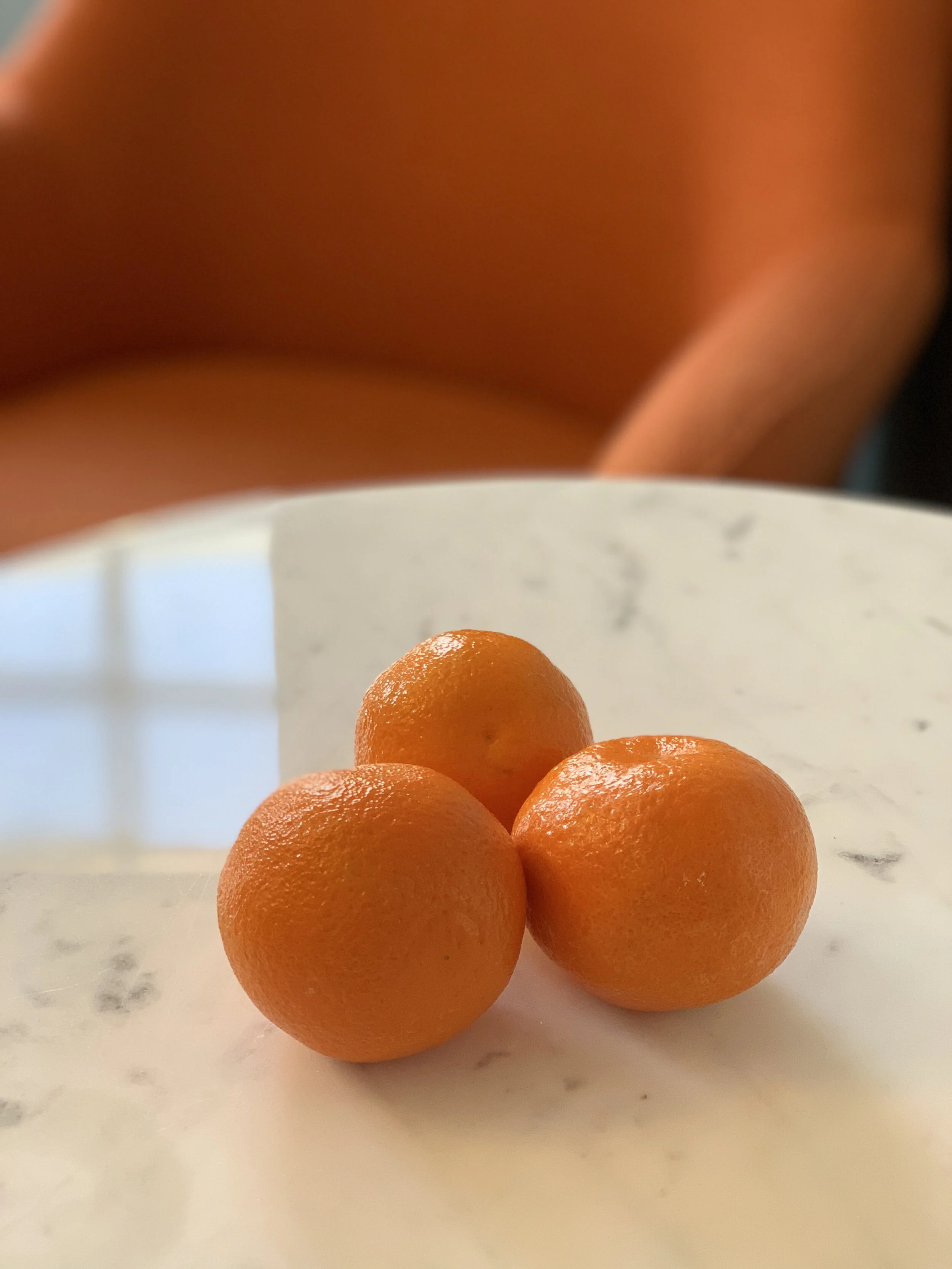
One of my favorite ways to use food as medicine is with homemade chen pi or dried tangerine peel. Satsuma or mikan (aka California Cuties or those little peelable oranges) are a big New Year’s food in my Japanese-tradition household. It’s easy to make use of the peels so this is a true no-waste food!
Cramps are the worst. Among the common symptoms we complain about when we bleed, this one ranks among the highest. But just because painful periods are common doesn't mean we have to accept them.
Patients sometimes ask me about the most surprising thing I learned in acupuncture school. I was definitely the most blown away by learning that you don’t have to be in pain during your period. You don’t need to have any symptoms, in fact. Just bleed, stop bleeding. That’s it. “WHAT?!” I thought. “Why doesn’t everyone know that? What do I need to do? Sign me up!”
While I was in grad school I had acupuncture treatments every week and took a formula daily for a year. My periods shifted dramatically and my pelvic pain (pain with intercourse or what’s medically referred to as dyspareunia) disappeared. I was in awe. I felt I had been given a key and I wanted to share it SO badly.
When you’re trying to conceive (TTC) there are already so many things you’re told you can’t do. And things no one tells you that could be getting in your way. And then on top of that you’re not supposed to stress out about it!
If you’ve been diagnosed with unexplained infertility, you’re trying to figure out what you could do to improve your chances of conceiving. Whether you’re continuing to try naturally or as you add in assisted reproductive technologies like medicated cycles with Clomid or Letrozole, IUI, or IVF, make sure these simple tips are on your list:
I’m moving my acupuncture schedule full time to the Healing Arts Building on Sutter and Hyde in San Francisco this September, which is a big milestone to celebrate. I love how calm this clinic is and patients often remark how relaxed they feel. I’m glad to be spending more time with you in this beautiful healing space!
When I visited before deciding to rent here in Spring 2018, there were many things I loved about the whole building right away. It's beautiful with a lot of old-style character. The Sutter Healing Arts building is brick, which always feels warm to me, was built in the 1900s in Beaux Arts style, and originally housed a urology practice on the first floor with the doctor living upstairs. So there’s a lot of history here as a medical space, yet it’s also been a home from the beginning, making it the perfect place to create a clinic that’s not clinical.
Happy First Day of Spring! Spring is when new green shoots rise, tendrils reach out for the next hold, and the world gets a bit warmer and brighter. I hope holding that image in your mind helps you find what the majority of my patients said their goal was for this year: more energy.
I think we're so tired in part because we're expected to come out of the gate of the New Year bursting with energy for new projects and self improvement. I've never been one to make New Year's Resolutions, but this year it felt especially off, setting us all up for failure. It's just not the right time. Winter is when we want to curl up in front of a fire with a good book, a blanket, and a hot beverage. No wonder we fail so routinely at most of our resolution setting and everyone coming in in January was so incredibly fatigued!
It's a very common question: "Does acupuncture treat …?" The short answer is YES!, no matter the condition, because acupuncture is a complete medical system.
While it’s tempting to hear that as equivalent to a specific drug being touted as a panacea, it’s really like saying all of medicine can address a wide variety of ailments. We’re much more comfortable with that concept. Western or allopathic medicine can help with lots of things to varying degrees. It’s much the same with acupuncture. That’s one of the reasons it’s more accurately referred to as a complementary medicine, rather than alternative medicine.
For the second year in a row I am proud to share that I have been named a Top Pro by Thumbtack, a tool that connects customers with local professionals.
Update: July 2019 – Note that Tyler is now seeing patients on Tuesdays only in this space.
I’m pleased to announce that Tyler Chamberlain, Certified Massage Therapist is now sharing our San Francisco clinic space at the Sutter Healing Arts Building. He’s seeing clients on Saturdays, Sundays, and Tuesdays.
Tyler’s style is in harmony with my approach to gentle, personalized treatments. He offers time-based appointments that are then tailored to your needs on a given day using his massage skillsets including Swedish, Deep Tissue, Ortho-bionomy, Energy, and Lymphatic/Detox. Having experienced his work myself, I highly recommend his thoughtful, effective, and deeply relaxing care.
His introduction to you in his own words:
Seasonal change isn’t instant. Especially here in the Bay Area, it’s gradual. 1 step forward, 2 steps back, until it isn’t. It takes a special focus to notice it as it shifts. We may yet get our warm Late Summer days that often show up in late September/ October, but Autumn has already been happening. There’s that chill in the air. A certain crispness. A lot of complaints of dry throats.
Eastern Medicine takes its cues from the natural world. As it is in nature, so is it in our bodies and emotional landscapes. Spring and Summer both have an energy of new growth and expansion. There’s a fullness and flourishing. In Autumn, we start to draw back into the interior.
There are five elements (sometimes also called Five Phases) in Eastern Medicine: Fire, Earth, Metal, Water, and Wood. The Five Elements have corresponding seasons, tastes, channels, energies, diseases, and so much more that there is an entire school of thought in Chinese Medicine defined by this focus.
Positive Vibes Only? Definitely not. Negative emotions are natural and can signal a need to change our relationships, environment, or behavior. It’s when negative emotions become chronic and feel like they arise without cause, that you turn to guiding practitioners like therapists and acupuncturists who can help you figure out what forest of feelings you've wandered into and how you can find your way back out again.
Whether your depression, anxiety, and stress are chronic or not, tamping down negative feelings or denying them in favor of only positive feelings is neither realistic nor helpful. What is helpful and what acupuncture helps facilitate is giving all your feelings a space and distance from yourself to be acknowledged, fully felt, and then allowed to pass. That can be an extended grieving period and or as short as a few minutes to recognize that you're getting frustrated and need to breathe deeper and take a walk.
Understanding what you're feeling, giving that feeling space, and then letting it go is essential in our modern world. With these skills, you can begin to move past the thicket of a bad stretch. And when you have one bad day, you'll realize that's part of being human, not a sign that you're broken.
A Note From Shawna
This paper was originally titled, "Classic Texts: The Foundation of Japanese Meridian Therapy Assessed Clinically in Comparison to Traditional Chinese Medicine." I wrote it during the final years of my masters program in acupuncture at AIMC Berkeley for a course on classical texts.
This paper presumes knowledge of the medicine so is most appropriate for other practitioners, but as patients often ask about Japanese vs Chinese medicine, a general audience might find it interesting to skim. I'm happy to discuss any questions you may have after reading.
••••••••••••••••••••••••••••••••••••••••••••••••••••••••••••••••
How can Japanese Meridian Therapy and Traditional Chinese Medicine have come from the same classic texts and yet come to such different conclusions for diagnosis and treatment? This is the question I chose to consider by delving into Chapters Sixty-Nine and Seventy-Five of the Nan Jing, considered the foundation of Japanese Meridian Therapy.
Meridian Therapy was founded in the 1930s out of a desire to “reexamine the classics and to clinically test the knowledge gained therein in order to extract the truth” (Kuwahara, xvii). The principle methods of Japanese Meridian Therapy (JMT or MT) are to palpate and assess the meridians, using the pulse for both diagnosis and continual assessment of the progress of treatment, and to use the meridians in this way to understand the balance of deficiency and excess caused by pathogens, the seven emotions, and the fundamental interaction of the meridians and organs to themselves and each other (the Five Phases). This is fairly different from Eight Principle and Zang Fu Diagnosis as interpreted in Traditional Chinese Medicine (TCM). In the TCM approach, we utilize the four diagnostic methods (asking, looking, listening, and palpating), base our diagnosis on the collection of symptoms and signs based on the chief complaint, and identify a specific pattern based on the organs, yin/yang, and body elements (like blood, body fluids, and qi) in disharmony, all of which determines the course of treatment. Depending on the TCM practitioner, palpation may be used to refine the choice of points (this is common at least in the case of choosing local ashi points) or at the extreme they may only use the trusted points in texts from Chinese Acupuncture and Moxibustion (CAM). I admit this is a gross simplification of the vast differences within the practices of TCM and JMT respectively, but seeing from the extremes can help to highlight the differences between the disciplines.